
 English
 اردو
اردو
Introduction
Bees are among the most intriguing creatures in the animal kingdom, renowned for their complex social structures and highly organized colonies. Understanding the internal hierarchy of bees and how roles escalate within their community offers valuable insights into their social behavior, efficiency, and survival strategies.
The Hierarchy of a Bee Colony
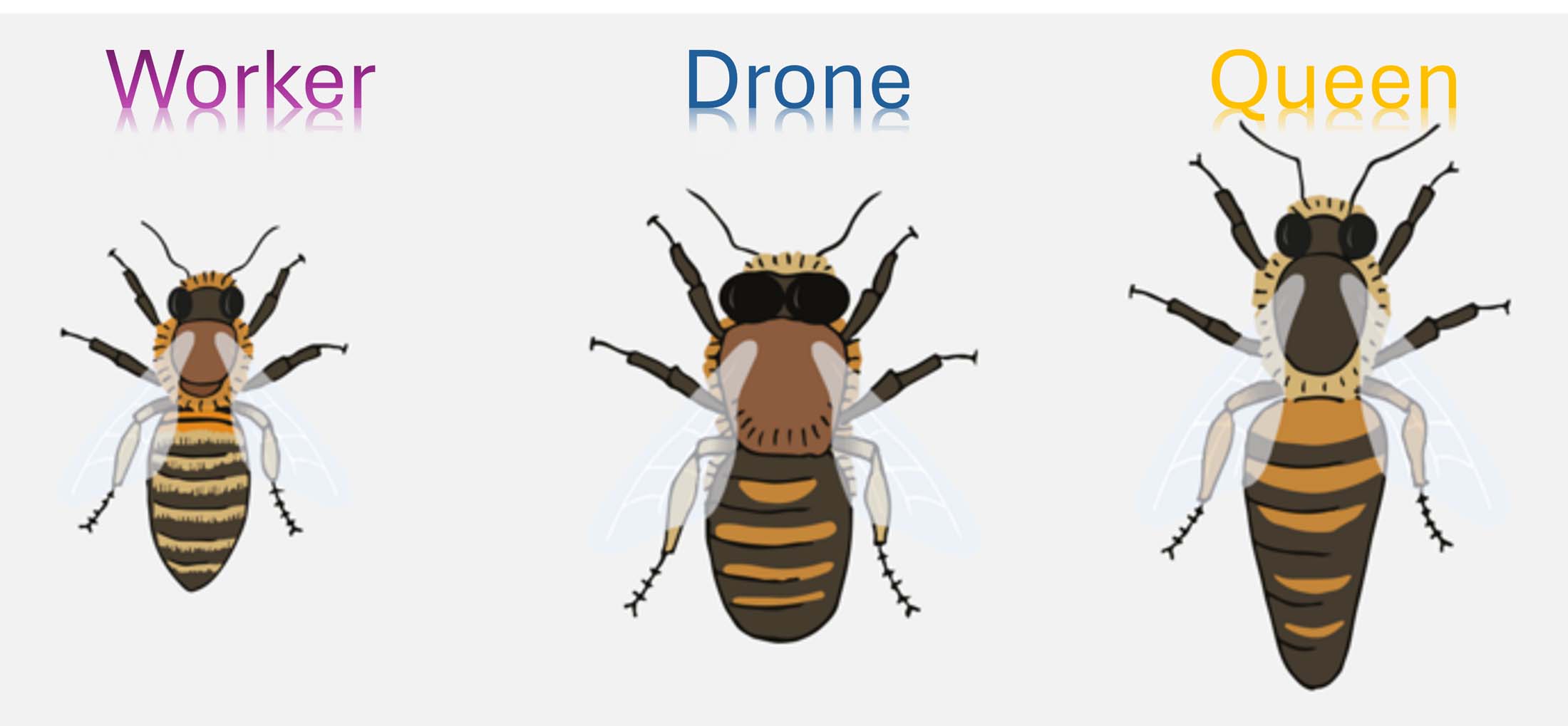
A typical bee colony consists of three primary castes, each with distinct roles and responsibilities:
1. Queen Bee
• Role: The queen is the colony’s reproductive heart. Her primary function is to lay eggs—up to 1,500 per day during peak times.
• Characteristics: She is usually the largest bee, with a long abdomen and is the mother of most, if not all, bees in the colony.
• Hierarchy Position: At the top of the hierarchy, she is the central figure, influencing colony activities through pheromones.
2. Worker Bees
• Role: Worker bees are all female and perform a variety of tasks vital for colony maintenance:
o Foraging for nectar and pollen
o Caring for the young
o Cleaning and protecting the hive
o Regulating hive temperature
• Characteristics:
They have specialized roles that may change with age, a concept known as age polyethism.
3. Drone Bees
• Role:
Male bees whose main job is to mate with a virgin queen.
• Characteristics:
Drones are generally larger and lack stingers. They do not contribute to hive maintenance.
Escalation of Roles and Hierarchical Dynamics
The hierarchical structure in a bee colony is dynamic, with roles potentially escalating or transforming based on needs and environmental cues.
How Does Role Escalation Occur?
From Worker to Queen (Rare and Specialized)
• In exceptional cases, a worker bee might develop into a supersedure queen if the current queen is failing or has died.
• This process involves the worker bee laying a special egg that is fed a rich diet of royal jelly.
• The larva then develops into a new queen, elevating her status within the hive.
From Worker to Queen Bee (In Exceptional Circumstances)
• Occasionally, a particularly well-fed worker may develop into a queen-like figure temporarily but cannot fully replace the colony’s reigning queen unless she is fertilized and accepted.
Role Changes Within Workers
• Younger worker bees tend to perform tasks inside the hive (nursing, cleaning).
• As they age, they “escalate” roles into foraging and defense.
How Does Hierarchical Control Depend on Pheromones?
• The queen’s pheromones suppress the reproductive capabilities of worker bees.
• If the queen is lost, the workers detect the absence through pheromonal changes and begin to rear a new queen.
• The new queen’s emergence and subsequent mating escalate the colony's reproductive cycle.
Colony Responses to External Threats and Internal Changes
• The hierarchy also escalates in response to threats, with worker bees becoming more aggressive and forming protective ‘guards’.
• During swarming, a new queen emerges, and the old queen leaves with a large portion of the worker bees to establish a new colony—an escalation of reproductive behavior.
Conclusion
The internal hierarchy of bees is a finely tuned system of roles, responsibilities and communication, largely governed by pheromones and environmental cues. Escalation within this hierarchy—whether through role changes among workers, the emergence of new queens, or defensive behaviors—ensures the colony's resilience, reproduction, and survival. Understanding these processes not only fascinates scientists and nature lovers but also provides insights into complex social systems beyond the hive.